

Digital Scans and 3D Imaging in Modern Orthodontics
Orthodontic care has changed a lot over the years. While the goal is still to create healthy, confident smiles, the way orthodontic specialists plan treatment has become more comfortable, precise, and personalized. Digital scans and 3D imaging allow our team to see the teeth, bite, jaw, and supporting structures in greater detail, helping us create treatment plans that fit each patient’s needs.
At Rechtin Jacobs Orthodontics in Crestview Hills, KY, Dr. Alli Jacobs and Dr. Paige Rechtin use modern orthodontic technology to make care feel easier for children, teens, adults, and busy families throughout Northern Kentucky. These tools help us plan braces, clear aligners, retainers, expansion treatment, and other orthodontic needs with a clearer picture from the start.
This Article will address
- What digital scans are used for in orthodontics
- How digital impressions replace traditional molds
- Whether digital impressions are more accurate
- How digital imaging can improve Invisalign and clear aligner treatment
- How 3D imaging helps orthodontists evaluate teeth, jaws, roots, airways, and facial structures
- Why families in Crestview Hills, KY choose Rechtin Jacobs Orthodontics for modern orthodontic care
What Are Digital Scans Used for in Orthodontics?
Digital scans are used to create a detailed digital model of your teeth and bite. Instead of relying only on physical impressions, digital scanning allows our orthodontic specialists to capture the shape, position, and relationship of the teeth in a more modern format.
These scans are helpful for many parts of orthodontic care, including:
- Planning braces or clear aligner treatment
- Evaluating crowding, spacing, and tooth position
- Checking how the upper and lower teeth fit together
- Designing retainers, aligners, and certain orthodontic appliances
- Monitoring changes during treatment
- Helping patients better understand their treatment plan
Digital scans also make it easier for patients and parents to see what we see. When your teeth and bite are displayed as a digital model, it can be much easier to understand why treatment is recommended and how each step supports the final result.
At Rechtin Jacobs Orthodontics, we believe orthodontic care should feel clear, personal, and supportive. Digital scans help us explain treatment in a way that makes sense, especially for families who want to feel confident before moving forward.
How Do Digital Scans Replace Traditional Molds?
Traditional orthodontic molds usually involve biting into trays filled with impression material. For many patients, this can feel messy, uncomfortable, or difficult to tolerate, especially for children or anyone with a sensitive gag reflex.
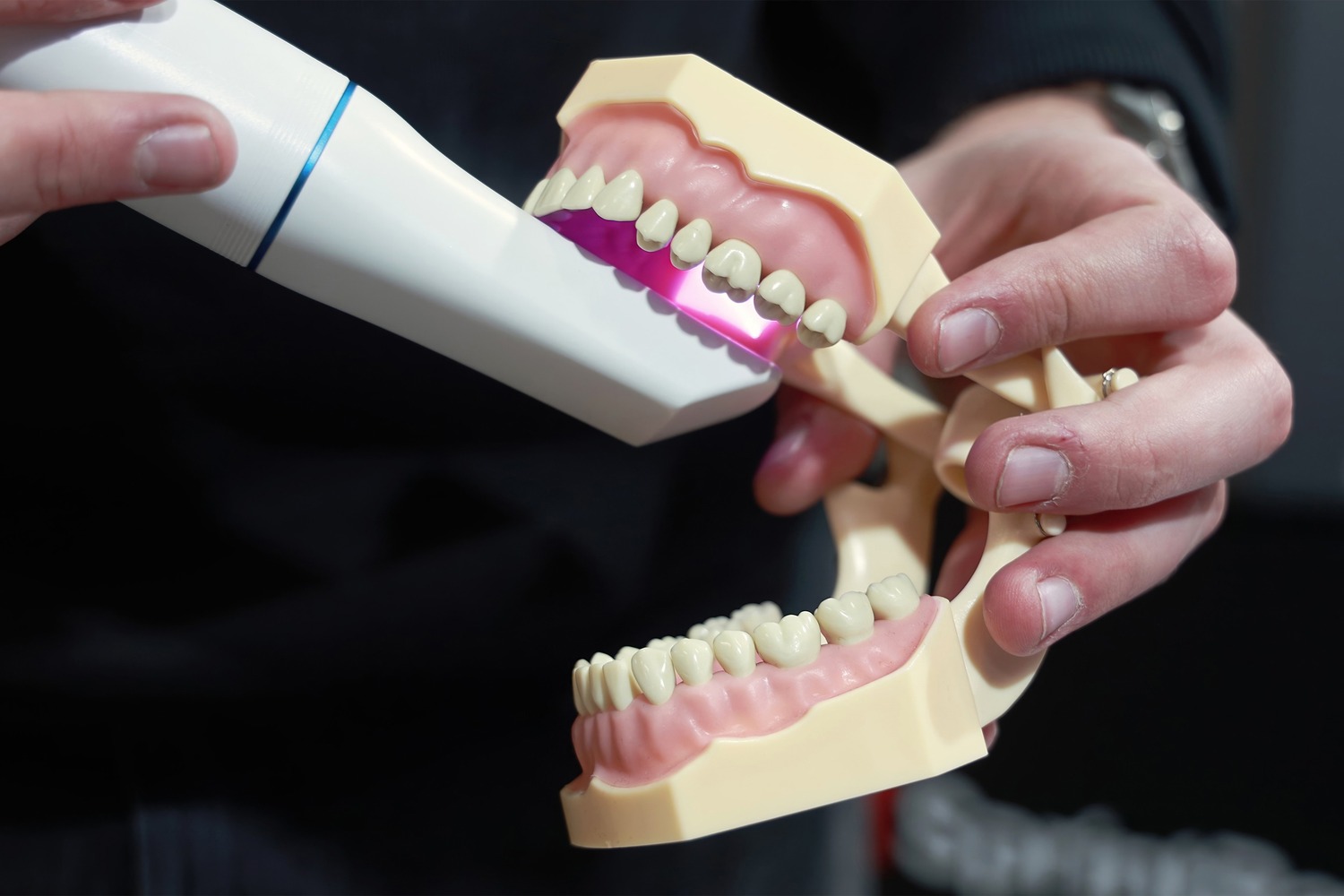
Digital scans offer a more comfortable alternative. A small handheld scanner is moved around the mouth to capture images of the teeth and bite. Those images are used to create a digital model, often without the need for goopy impression material.
For families, this can make the orthodontic experience feel much easier. Digital impressions are:
- Cleaner than traditional molds
- More comfortable for many patients
- Faster in many cases
- Easier to store and reference later
- Helpful for creating orthodontic appliances, retainers, and aligners
As moms and orthodontic specialists, Dr. Jacobs and Dr. Rechtin understand that families appreciate care that is efficient, comfortable, and low-stress. Digital scanning supports that kind of experience by making one of the most disliked parts of traditional orthodontic records feel simpler.
Are Digital Impressions More Accurate?
Digital impressions can create highly detailed models of the teeth and bite. In many cases, they can also reduce some of the issues that may happen with traditional impressions, such as air bubbles, movement during setting, or material distortion.
That accuracy matters because orthodontic treatment depends on careful planning. A detailed digital model can help our team evaluate the position of each tooth, how the bite fits together, and what type of treatment may be most appropriate.
Digital impressions can support:
- Better-fitting clear aligners
- More precise retainers
- Improved appliance design
- More detailed treatment planning
- Easier comparison of changes over time
However, technology does not replace orthodontic expertise. A scan is a tool. The real value comes from how an orthodontic specialist uses that information to create a plan that fits the patient’s needs, growth, bite, goals, and lifestyle.
At Rechtin Jacobs Orthodontics, our approach combines advanced technology with thoughtful clinical judgment. We use digital information to support personalized orthodontic treatment plans, not one-size-fits-all care.
Why Is 3D Imaging Important for Orthodontic Diagnosis?
Digital scans and 3D imaging are related, but they are not exactly the same. Digital scans usually capture the surface of the teeth and bite. 3D imaging can provide a deeper view of structures that may not be visible from the outside, such as tooth roots, jawbone, unerupted teeth, airway space, and skeletal relationships.
This can be important because orthodontic care is about more than straightening the teeth you can see. A healthy smile also depends on the bite, jaw position, tooth roots, bone support, facial growth, and long-term stability.
3D imaging may help orthodontic specialists evaluate:
- Impacted or unerupted teeth
- Tooth root position
- Jaw growth and skeletal development
- Bite problems
- Crowding or spacing concerns
- Airway or expansion considerations
- More complex orthodontic cases
For example, if a patient has an impacted canine, 3D imaging may help show where that tooth is located and how it relates to nearby roots. If a patient has a narrow upper jaw or bite imbalance, imaging may help the orthodontist evaluate whether expansion may be appropriate.
This level of detail can help our team make more informed recommendations and explain treatment options more clearly.
How Does Digital Imaging Improve Invisalign Results?
Digital imaging can play an important role in Invisalign and clear aligner treatment. Since aligners are designed to move teeth in a planned sequence, accurate digital records are important from the beginning.
Both Dr. Alli Jacobs and Dr. Paige Rechtin are certified in many clear aligner options, giving our team flexibility when recommending treatment. Digital scans can be used to create a detailed model of the teeth, map planned tooth movement, and help determine whether Invisalign or another clear aligner system is the right fit for the patient’s smile, bite, goals, and lifestyle.
Digital imaging may help Invisalign treatment by:
- Creating a detailed starting model of the teeth
- Supporting better-fitting aligners
- Helping map tooth movement
- Allowing patients to better visualize the treatment plan
- Supporting progress checks and refinements when needed
A well-fitting aligner can make treatment feel more comfortable and help guide teeth according to the treatment plan. Still, Invisalign results depend on more than the scan alone. Successful clear aligner treatment requires the right diagnosis, a carefully designed plan, patient compliance, and ongoing supervision from an orthodontic specialist.
Our goal is to help patients understand what to expect and feel confident that their treatment is being planned with care.
Can Digital Scans and 3D Imaging Help With Braces Too?
Digital scans and 3D imaging are not only for Invisalign or clear aligners. They can also support traditional braces treatment.
For patients with braces, digital technology can help our team evaluate tooth position, bite alignment, spacing, crowding, and treatment progress. It can also help patients and parents see how the teeth are moving over time.
Digital technology may support braces by helping with:
- Treatment planning
- Bite evaluation
- Tooth movement assessment
- Early orthodontic intervention planning
- Appliance or retainer design
- Progress monitoring throughout treatment
This is especially helpful because every patient’s smile is different. Some children need early orthodontic guidance as their jaws and teeth develop. Some teens need braces to correct crowding or bite issues. Some adults want to improve their smile after years of shifting or untreated alignment concerns.
Modern orthodontic technology helps us plan care for each stage of life, whether the patient needs braces, clear aligners, early intervention, or retainers.
What Should Patients Expect During a Digital Scan?
A digital scan is typically a simple and comfortable process. During the scan, the patient sits in the orthodontic chair while a small handheld scanner captures images of the teeth and bite. These images are then used to create a digital model.
Many patients appreciate that digital scanning does not require trays of impression material. This can be especially helpful for younger patients, patients with smaller mouths, or patients who have had uncomfortable experiences with traditional molds in the past.
During a digital scan, patients can usually expect:
- A comfortable seat in the orthodontic chair
- A small scanner moving around the teeth
- No messy impression material for many records
- A digital model that can be reviewed by the orthodontic team
- A clearer explanation of findings and possible treatment options
For kids and teens, this can make the appointment feel less intimidating. For parents, it can make the process easier to understand. For adults, it can make orthodontic care feel more modern, efficient, and approachable.
Is 3D Imaging Safe for Children, Teens, and Adults?
Digital intraoral scans do not use radiation. They capture images of the teeth and bite to create a digital model.
Some types of 3D imaging, depending on the system used, may involve X-ray technology. When imaging is recommended, it is because the information can help guide diagnosis or treatment planning. Orthodontic specialists consider each patient’s age, concerns, treatment goals, and clinical needs before recommending imaging.
3D imaging may be recommended for situations such as:
- Impacted teeth
- Complex bite concerns
- Jaw growth concerns
- Airway or expansion evaluation
- Surgical or interdisciplinary planning
- Root position assessment
Our team believes imaging should have a clear purpose. The goal is to gather the right information to support safe, effective, personalized care without recommending unnecessary steps.
How Do Digital Scans and 3D Imaging Create a Better Patient Experience?
Orthodontic treatment can feel overwhelming when patients do not understand what is happening or why a certain treatment is recommended. Digital scans and 3D imaging help make the process more visual, comfortable, and easier to follow.
These tools can improve the patient experience by:
- Reducing the need for traditional molds
- Helping patients see their teeth and bite
- Supporting clear communication
- Making treatment planning more precise
- Helping families feel more informed
- Making orthodontic visits feel more comfortable
At Rechtin Jacobs Orthodontics, technology is only part of the experience. The way we use it matters. Our practice was built around trust, integrity, empathy, and relationships. We want every patient to feel seen, heard, and cared for, whether they are coming in for a first consultation, braces adjustment, clear aligner check, or growth evaluation.
We know families are busy. Between school, work, activities, and daily responsibilities, orthodontic care should feel as convenient and stress-free as possible. Modern orthodontic technology helps us create that kind of experience while still focusing on excellent clinical care.
Why Choose Rechtin Jacobs Orthodontics for Modern Orthodontic Technology in Crestview Hills, KY?
Choosing an orthodontist is about more than choosing a treatment. It is about choosing a team you trust with your child’s smile, your teen’s confidence, or your own health and appearance.
Rechtin Jacobs Orthodontics is located in Crestview Hills, KY, and serves families throughout Northern Kentucky. Led by Dr. Alli Jacobs and Dr. Paige Rechtin, our practice combines advanced orthodontic technology with warm, personal care.
Our doctors are orthodontic specialists who understand that every patient has different needs, goals, and concerns. We take time to listen, explain options, and create treatment plans that make sense for the individual, not just the appliance.
Families choose Rechtin Jacobs Orthodontics because we offer:
- Personalized orthodontic care for kids, teens, and adults
- Traditional braces and clear aligner options
- Invisalign treatment planning
- Early orthodontic intervention
- Modern digital scanning and imaging technology
- A welcoming, family-centered environment
- Free consultations
- Care rooted in the Northern Kentucky community
As moms, Dr. Jacobs and Dr. Rechtin understand how important it is for care to feel practical, compassionate, and clear. Our goal is to make orthodontic treatment feel manageable for families while helping patients build confidence in their smiles.
Schedule a Free Consultation in Crestview Hills, KY
Digital scans and 3D imaging have made modern orthodontics more comfortable, precise, and personalized. From replacing traditional molds to supporting Invisalign, braces, MARPE planning, and early orthodontic evaluation, these tools help orthodontic specialists better understand each patient’s smile from the start.
If you are looking for modern orthodontic technology in Crestview Hills, KY, Rechtin Jacobs Orthodontics is here to help. Our team is proud to serve children, teens, adults, and families throughout Northern Kentucky with care that is advanced, welcoming, and personalized.
To schedule a free consultation with Rechtin Jacobs Orthodontics, call 859-446-7411.
Sources
Dr. Jacobs & Dr. Rechtin
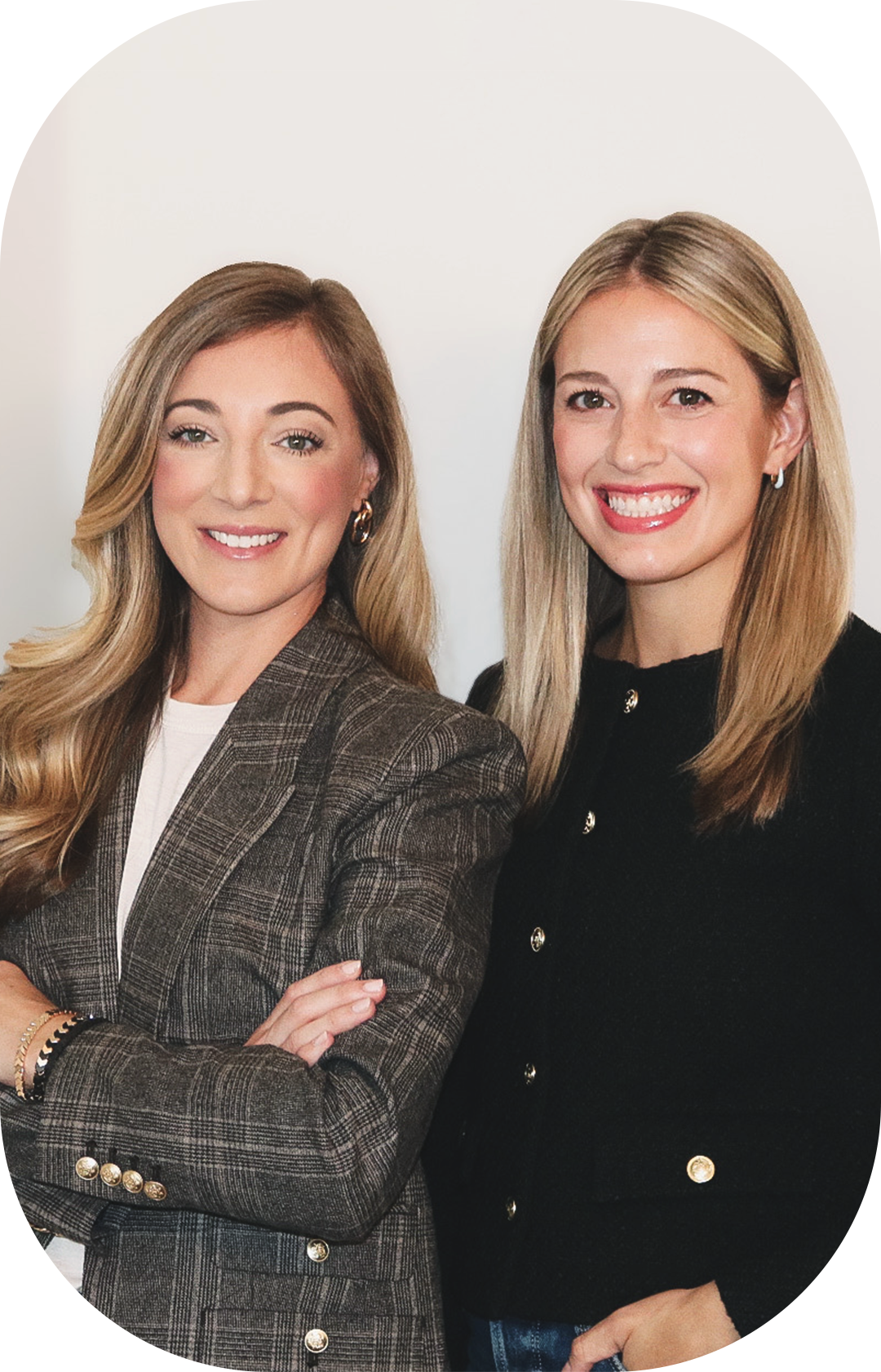
Written by Dr. Paige Rechtin and Dr. Alli Jacobs, the orthodontists at Rechtin Jacobs Orthodontics in Crestview Hills, KY, this blog is built to help patients feel informed and confident about their care. Both doctors earned their dental degrees at the University of Kentucky College of Dentistry with honors and completed advanced orthodontic training through top graduate programs. Their approach combines meticulous planning, modern technology, and Invisalign experience to create personalized treatment plans for children, teens, and adults.
As Northern Kentucky locals and busy parents themselves, Dr. Rechtin and Dr. Jacobs understand real-life schedules and work to make orthodontic care as smooth and supportive as possible. They believe great results start with listening, education, and a genuine connection with every patient and family they serve.