
Signs You or Your Child May Need Orthodontic Treatment
Are you wondering whether your child’s crowded front teeth are just a baby-tooth phase, or whether that jaw click you’ve had for years finally deserves attention? Orthodontic problems rarely announce themselves loudly. They show up as small, easy-to-miss clues, like a tooth erupting sideways, a bite that never quite lines up, or a habit such as thumb sucking that lingers longer than it should. At Rechtin Jacobs Orthodontics, we work with families across the tri-state every week who are trying to figure out whether what they’re noticing is worth a phone call. In most cases, the honest answer is yes: worth a conversation, even if the outcome is simply watching and waiting as your child grows.
This Article Will Address
- The most common signs a child may benefit from braces or early treatment
- Symptoms that suggest an adult should think about orthodontic care
- Whether crooked teeth create problems beyond how a smile looks
- How to tell whether something you’ve noticed is minor or needs correction
What Are Common Signs a Child Needs Braces or Early Treatment?
The clearest signs a child needs braces or early treatment are crowded or overlapping teeth, a bite that doesn’t meet evenly, and habits like prolonged thumb sucking, tongue thrusting, or mouth breathing. Any of these on their own is worth mentioning at your child’s next checkup; a few together are worth scheduling an evaluation sooner rather than later.
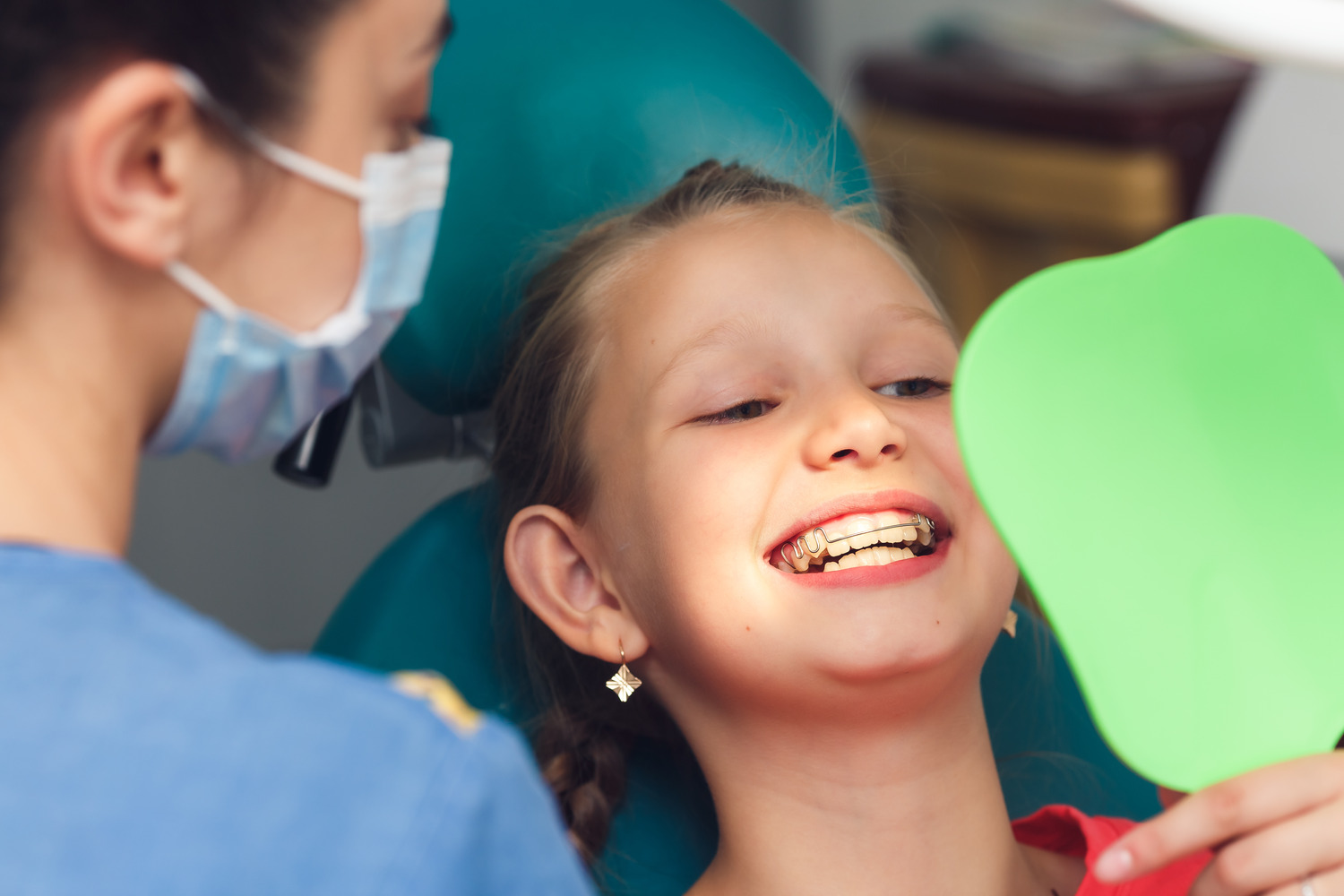
The American Association of Orthodontists recommends a first orthodontic evaluation by age 7, when a child still has a mix of baby and permanent teeth. That timing matters. It gives an orthodontist room to guide jaw growth and intercept developing problems while bones are still forming, rather than waiting until a bite has fully set and options have narrowed.
- Crowded, overlapping, or twisted baby or permanent teeth
- Teeth that don’t meet evenly, including an overbite, underbite, or crossbite
- Losing baby teeth much earlier or later than siblings did
- Difficulty biting or chewing, or noticeable speech problems
- Mouth breathing, snoring, or frequent jaw popping
- Thumb sucking, tongue thrusting, or pacifier use past age 4
If any of these sound familiar, an early intervention (Phase 1) evaluation doesn’t commit your child to immediate treatment. Many children are simply monitored for a year or two before anything is recommended, while others benefit from fitting an expander or other orthodontic appliances into place while the jaw is still growing. Habits like mouth breathing and thumb sucking are worth flagging too, since left alone they can narrow the palate or push front teeth forward in ways that are much simpler to redirect at age 7 than at age 14. Either way, Dr. Alli Jacobs and Dr. Paige Rechtin can walk you through which path fits your child.
What Symptoms Suggest an Adult Should Consider Orthodontic Treatment?
Adults are more likely to notice functional symptoms than obvious crowding: teeth that have drifted or shifted over the years, jaw pain or clicking, difficulty chewing certain foods, or front teeth wearing down unevenly. None of these are signs you simply have to live with.
Teeth are not static once you reach adulthood. Grinding, gum recession, tooth loss, and even the everyday pressure of your tongue against the back of your front teeth can shift a smile that was perfectly straight in your twenties. Because these changes happen gradually, many adults don’t realize how much movement has occurred until a dentist points it out, or until a bite starts to feel genuinely uncomfortable.
- Teeth that have visibly shifted, gapped, or crowded again years after braces
- Jaw soreness, clicking, or popping, especially first thing in the morning
- Chewing that feels lopsided or uneven on one side of your mouth
- Chronic headaches connected to a tight or strained jaw
- Front teeth wearing down faster than the rest of your smile
The good news is that healthy teeth can be treated orthodontically at almost any age. Many adults choose comprehensive orthodontic treatment or clear aligners specifically because the process now fits more discreetly into a busy schedule than it did a generation ago, with fewer office visits and options that are barely noticeable day to day. Our full range of orthodontic care covers everything from traditional braces to modern aligner systems, so there’s usually more than one comfortable path to the same result.
Can Crooked Teeth Cause Problems Beyond Appearance?
Yes. Crooked or crowded teeth affect far more than how a smile photographs. They can make daily brushing and flossing harder, strain the jaw joint, and even affect how clearly you speak.
Tightly overlapped teeth create spots a toothbrush and floss simply can’t reach, which raises the risk of cavities and gum irritation over time. An uneven bite also forces the jaw muscles to compensate every time you chew, which can lead to soreness, popping, or long-term joint strain. Some people develop a mild lisp or notice a whistle on certain sounds because the tongue and teeth aren’t meeting the way they’re meant to. There’s a confidence cost too; plenty of people quietly avoid smiling in photos or covering their mouth when they laugh, long before they ever mention it to a dentist.
A misaligned bite can also make chewing less efficient, which means food isn’t broken down as well before it’s swallowed, and it can put uneven pressure on certain teeth that leads to premature wear or chipping. None of this means every slightly rotated tooth needs treatment. It means the decision shouldn’t rest on appearance alone. A bite that functions poorly today tends to get harder to correct, not easier, the longer it’s left alone.
How Do I Know if It’s a Minor Issue or One That Needs Correction?
A good rule of thumb is that cosmetic irregularities you can comfortably live with rarely need urgent attention, while anything affecting function, causing discomfort, or changing over time is worth a professional opinion.
A slightly rotated tooth that doesn’t bother you day to day is a very different situation from a crossbite that’s wearing down enamel, or a jaw that clicks every time you eat. The safest way to tell the difference is a short, no-pressure evaluation rather than guessing on your own. At Rechtin Jacobs Orthodontics, every new patient exam starts with digital scans and an honest conversation about what we’re actually seeing, not a sales pitch for braces or aligners you don’t need. Sometimes the right answer is simply to keep watching; other times, starting sooner genuinely makes treatment shorter and simpler than waiting until the issue becomes harder to ignore.
It also helps to pay attention to trends rather than a single snapshot. A tooth that has looked the same for years is a different conversation than one that has visibly shifted over the last several months, or a bite that used to feel fine and now causes soreness by the end of the day. Change over time is one of the clearest signals that it’s worth having a professional take a look, even if you’re not sure the issue is serious.
Schedule Your Free Orthodontic Consultation Today
If you read through this list and recognized even one or two signs in yourself or your child, that’s reason enough to get a second opinion. Rechtin Jacobs Orthodontics is currently welcoming new patients in Crestview Hills, KY, and every new patient exam includes a free consultation with Dr. Alli Jacobs or Dr. Paige Rechtin. Call 859-446-7411 or request an appointment online, and let’s figure out together whether now is the right time to start.
Sources
- Child Orthodontics: When to See an Orthodontist by Age 7 (American Association of Orthodontists)
- Malocclusion (Misaligned Bite): Types and Treatment (Cleveland Clinic)
- Orthodontics – Braces (MouthHealthy, American Dental Association)
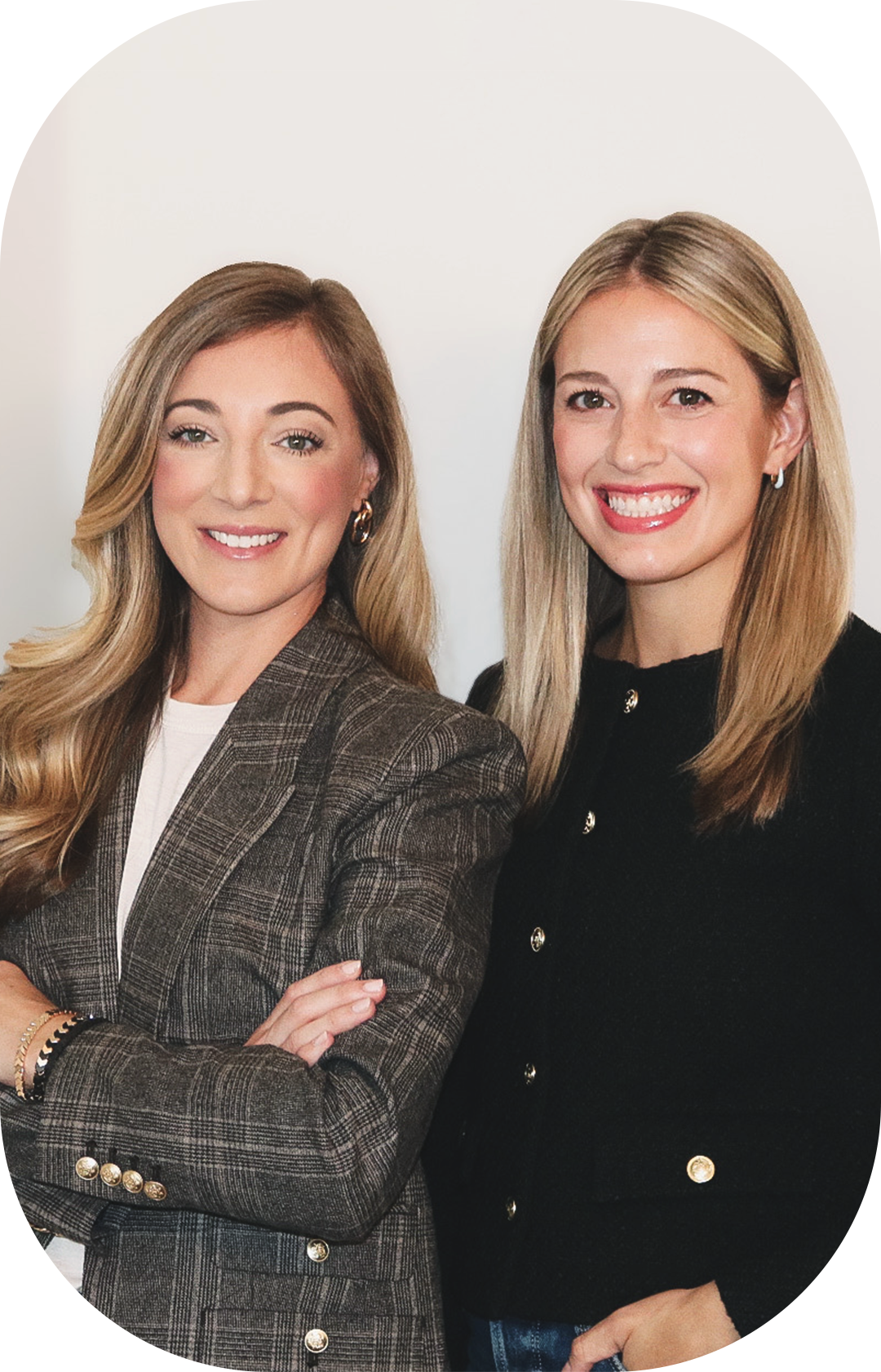
Dr. Jacobs & Dr. Rechtin
Written by Dr. Paige Rechtin and Dr. Alli Jacobs, the orthodontists at Rechtin Jacobs Orthodontics in Crestview Hills, KY, this blog is built to help patients feel informed and confident about their care. Both doctors earned their dental degrees at the University of Kentucky College of Dentistry with honors and completed advanced orthodontic training through top graduate programs. Their approach combines meticulous planning, modern technology, and Invisalign experience to create personalized treatment plans for children, teens, and adults.
As Northern Kentucky locals and busy parents themselves, Dr. Rechtin and Dr. Jacobs understand real-life schedules and work to make orthodontic care as smooth and supportive as possible. They believe great results start with listening, education, and a genuine connection with every patient and family they serve.